Electronic component recognition app (in development)

Our team is developing a mobile app for recognizing SMD electronic components.

The app can:

  • recognize a component’s marking from a photo (neural network);
  • identify the package type and pin count;
  • search a component in its own database of 148,000+ markings and 3,200 packages.

The app is currently in closed beta testing with electronics repair specialists. We are gathering feedback and improving recognition accuracy.

We will announce the public launch separately — stay tuned.

RP2350 development boards and J-Link v9 programmer clones now in stock

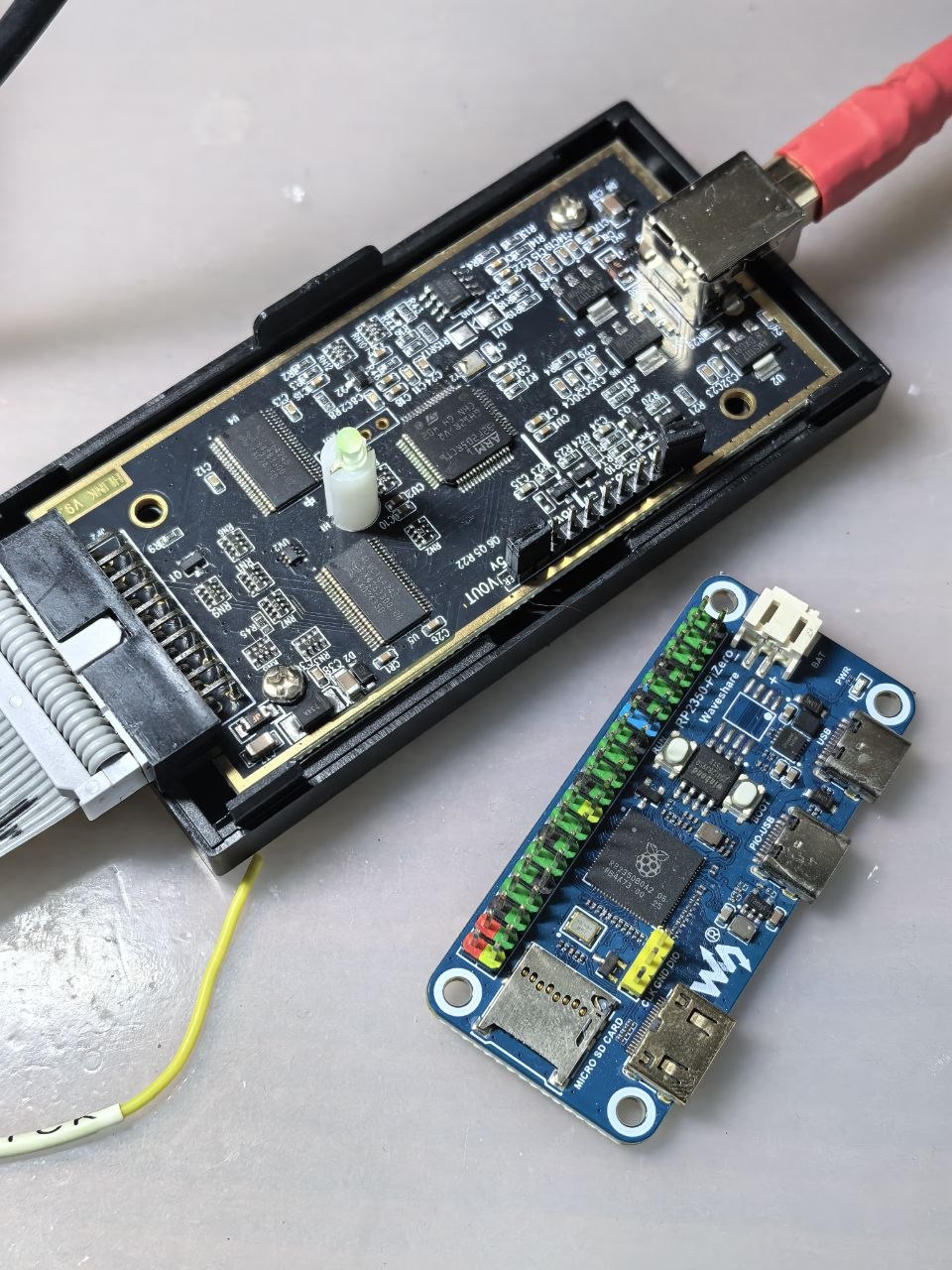
RP2350 board and J-Link v9 clone

Our range now includes development boards based on the RP2350 microcontroller. Compared to the previous generation (RP2040), the new chip is noticeably more powerful — and, importantly for tasks involving protection bypass, it overclocks well.

It is reported that raising the supply voltage of the RP2350 (the chip behind the Raspberry Pi Pico 2, among others) to 3.05 V allows clock frequencies above 800 MHz — an overclock of more than 5x the stock rate. For glitching tasks, this frequency headroom makes the RP2350 an optimal choice.

We also stock high-quality J-Link v9 programmer clones with a generous set of power rails — a convenient solution for a wide range of target boards.

For availability and purchasing, please use the Contacts section.

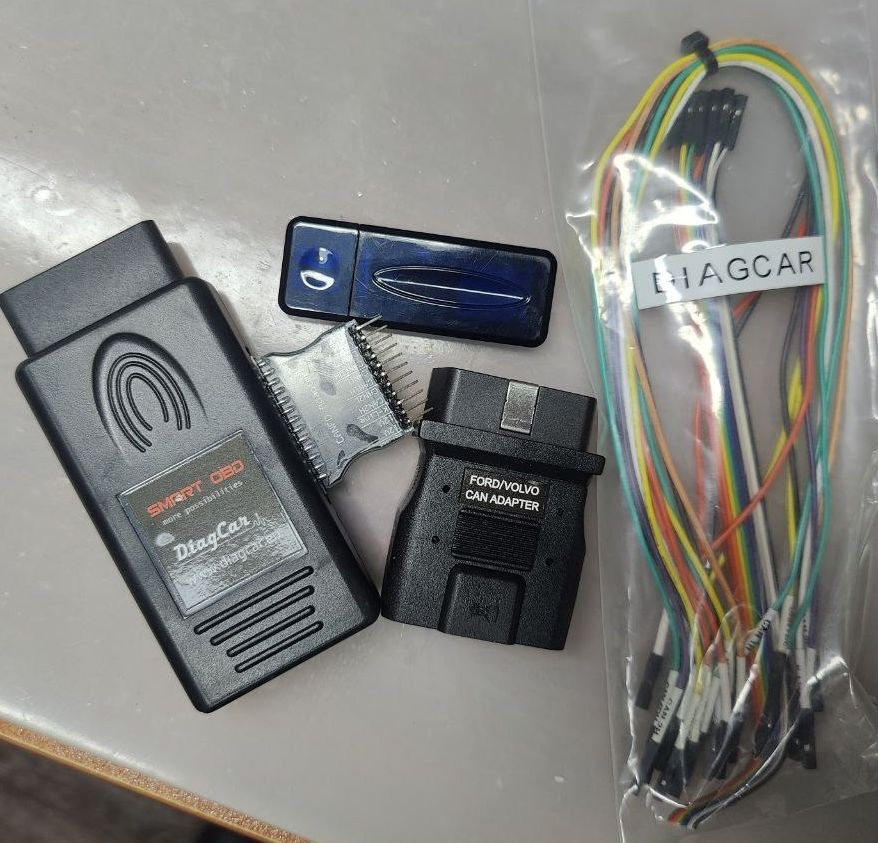
AST DiagCar Airbag kit available — a tool for SRS units

AST DiagCar Airbag

For professional technicians working with airbag units — an addition to the arsenal. We offer the AST DiagCar Airbag kit for programming and recovering SRS control units.

It is a solution for those who handle airbag units as a routine workflow: it covers both recovery of damaged units and a correct reset of crash data.

Kit contents:

  • AST USB KEY activation dongle;
  • AST CAN software license (1 year);
  • AST dump calculator license (1 year);
  • SmartOBD CAN interface;
  • FORD / VOLVO CAN adapter;
  • CAN FD adapter;
  • set of connection cables.

License renewal is done via the manufacturer’s website. Learn more about the AST ecosystem and other configurations at diagcar.eu.

ABS Audi/VW repair system promotion — discount from September 9

Great news for technicians working with Audi/VW ABS units: starting September 9, a promotional price is set on our EEPROM read/write system. To find out the cost, please use the contact form on the website.

Here is a reminder of what the solution is. It is a complete kit delivered on a USB flash drive with everything needed to work with ABS units based on the TMS570LS3135 processor: software for reading and writing the EEPROM 95256, wiring diagrams for connecting to the CPU (no disassembly of the memory chip required) and a binary file editor.

The kit also includes a handy C123EF0 error calculator — a troublesome fault that appears after repeated vacuum pump errors and renders the unit inoperative. The tool lets you reset the error counter, after which the fault can be cleared normally with a diagnostic device — avoiding replacement of an expensive ABS unit.

The system works through a J-Link programmer (v9.x, not included). Technical documentation for connecting to the processor test points is included with the kit. A detailed description and a demo video are available on the product page.

Introducing ZReader — the next generation of ECU reading

We are proud to introduce our new program ZReader, the successor to the well-known JLinkZReader.

The key difference is automatic detection of the processor parameters you connect to. The original JLinkZReader required you to manually specify the exact CPU model. With ZReader you only choose the processor family — the parameters are detected automatically on connection by reading the DeviceID registers.

This greatly simplifies operation and reduces the risk of errors when reading and writing data from electronic control units.

Video: features of the J-Link programmer v9+

Our new video is out, dedicated to J-Link programmers. Using the v9+ as an example, we break down the internal structure of Chinese clones and the hidden dangers of using them when working with control units.

Chinese J-Link clones are widespread, but when working with ECUs they can behave unpredictably. In the video we show how clones differ from the original internally and what to watch out for to avoid damaging a control unit.

Watch the video: Features of the JLink v9+ programmer on Dzen

A processor that doesn’t exist: reading and writing its ROM

We published an article about a processor that doesn’t exist in the manufacturer’s lineup. Inside a Fiat SRS unit we found a chip marked TMS470PV384, which per the documentation does not exist — it is a proprietary variant of the TMS470 family with a rearranged register map.

The core is ARM7TDMI, but the base addresses and Flash register offsets differed from the known TMS470R1. To reconstruct the register map we analysed ARM IAR Embedded Workbench header files, disassembled the SEGGER bootloader and ported it to C using a neural network and IDA.

A particular challenge was the level-2 security keys: the processor reads freely, but erasing and writing require the correct keys, whose storage address was unknown to us. By probing the sector size we finally gained write access.

In the end we wrote a working bootloader capable of erasing and programming these “unknown” processors — parts that have been on the market for over 15 years but that no publicly available programmer could write.

Read the article on Habr →
Useful find: what is the FlexRay bus

While working on control units that use the FlexRay bus (e.g. ABS and SRS on newer Audi models), we came across a clear and well-structured article on CAN Hacker.

The article “What is FlexRay” explains how this high-speed bus works in an accessible way: its difference from CAN, the TDMA mechanism, static and dynamic segments, frame structure and node synchronisation.

Useful reading for anyone dealing with diagnostics and repair of modern control units — sharing the link.

Read the article →

Research and restoration of an Audi A4 SRS unit: locked CPU and glitch technology

We published an article on restoring an Audi A4 SRS unit (8W0959655J) that developed an unrecoverable internal error B2000-00 after a failed software update.

The challenge was the board’s read-protected Renesas V850E2 processor. To bypass the protection we studied the single-wire UART bootloader protocol and applied voltage glitch technology: an overclocked Raspberry Pi Pico (250 MHz) controlled the CPU flash supply pin (FVDD), injecting microsecond power dips at the right moment.

After a successful glitch attack we dumped both Code-flash and Data-flash. The firmware was restored with our odx.py script, and the EEPROM was sourced from a donor 104-version unit. The internal error cleared and the unit again responds correctly to diagnostics.

Read the article on Habr →

Resurrecting a VAG ABS control unit from a ‘brick’ state

We published a detailed article on restoring a VAG-group ABS control unit that turned into a “brick” after a failed firmware update.

During an update via ODIS Engineering, an ODX file for a different control unit modification (80A907379AN instead of 80A907379AF) was mistakenly used. ODX binary patches modify code, and the unit stopped communicating.

In our lab we dumped FLASH and EEPROM via JLinkZReader, wrote the odx.py script to analyse and roll back modified firmware sections, sourced a donor EEPROM, and performed partial reverse engineering of the dump structure to restore the unit’s original identifiers.

As a result the ABS control unit was fully restored and now responds correctly to diagnostic requests.

Read the article on Habr →